4-min read
Last updated: 15 Dec 2025
In a tightly interconnected global IP landscape, the firms that grow fastest aren’t just reacting to inbound requests, they proactively track which foreign law firms are sending IP filings into their jurisdiction. By identifying these sending firms and understanding their referral patterns, your firm can position itself as the go-to local partner, turning inbound “case-exchange” data into an advantage. With IP Pilot, you can transform this insight into a repeatable, scalable lead generation engine.
Why This Matters for Your Business
When foreign law firms start sending patent or trademark cases into your jurisdiction, it’s a clear sign: they need a foreign partner firm to handle the filing. That creates a perfect opportunity, your firm can step in, offering expertise, local knowledge, and a reliable representation option. By monitoring these referral flows, you’re not guessing who might need your expertise; you’re identifying active demand.
This shifts your thinking from reactive to strategic: instead of passively waiting, you build relationships with influential foreign firms and capture referral business before others even notice the opportunity.

1. Define Which Referral Flows Matter to You
Start by mapping out which foreign jurisdictions or regions are most relevant for your practice. Maybe you want to work with U.S. firms, Japanese firms, or European collaborators, and channel their incoming cases to your country. By defining these target jurisdictions, you keep your focus on referral flows that align best with your firm’s strengths and capacity.
That gives you a clear targeting framework, rather than a scattergun approach.
2. Spot Key Signals in Case-Exchange Data
The heart of this strategy is analyzing public data about international IP filings and referrals. Look for signals such as:
- Foreign law firms regularly sending cases to your jurisdiction.
- High volume of case referrals, indicating they depend on foreign partners.
- Consistent activity over time, rather than one-off referrals, suggests a stable partnership or workflow.
- Overlap with your firm’s expertise areas (certain technical fields, patent vs. trademark, etc.).
- The clients being referred, and whether your firm would be a credible match.
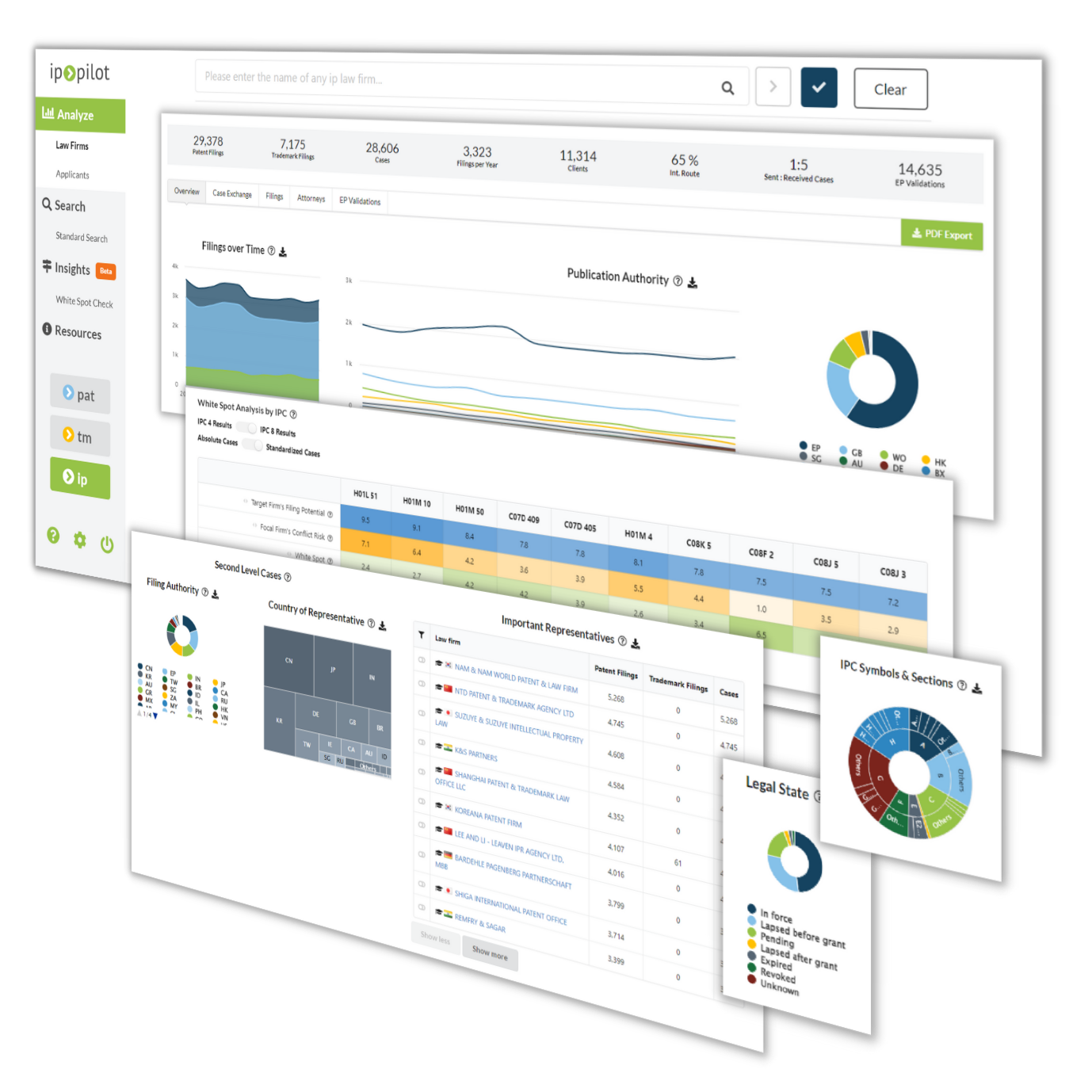
Collecting and cross-referencing this across national IP offices, WIPO filings or regional registries can be laborious, but IP Pilot merges this data into one unified view, making it far easier to spot meaningful patterns and high-potential firms.

An overview of how to quickly and easily search for this data in IP Pilot
3. Build and Evaluate a Referral Prospect List
Once you have identified foreign firms that regularly send work into your jurisdiction, evaluate them with these questions:
- Which firms are consistently active (many cases, over multiple years)?
- What kind of work are they sending – patents, trademarks, complex portfolios, straightforward filings?
- Who are their clients – are they big corporations, mid-size companies, high-growth start-ups?
- Does your firm’s profile and expertise fit the referral work they send?
This evaluation helps you prioritize outreach and build a refined pipeline of referral-link prospects.
4. Reach Out Strategically with Added Value
With a curated list in hand, craft outreach messages tailored to each foreign firm’s history and pattern:
- Reference the volume/frequency of referrals they have sent to your jurisdiction.
- Emphasize your local expertise: procedural knowledge, prosecution track record, cost-efficiency.
- Position yourself as a reliable, long-term referral partner, not just another vendor.
- Offer to take immediate workload off their plates (e.g. handling filings, renewals, monitoring, translations, local formalities).
Remember, you’re not cold-calling unknown businesses, you’re extending a proposition of partnership to active, relevant players. So reach out with knowledge and confidence.
5. Differentiate Through Value-Added Support
Once engagement begins, go beyond mere fulfilment: show that you’re a strategic partner. Provide value-added services such as:
- Notifications on local legal or procedural changes that might affect filings or enforcement.
- Insights on competitive filings in your jurisdiction (e.g. similar patents, trademarks).
- Portfolio-management advice and strategic counsel for their clients’ local IP presence.
This helps ensure you become their preferred go-to, and not just a one-off service provider.
Final Thought
By leveraging international referral flows, your firm can unlock a dependable, underutilised source of business, one driven by actual client activity, not speculative outreach. Tracking which foreign law firms are sending IP cases to your jurisdiction gives you insight into real demand, and positions you to respond quickly with the right offering.
With IP Pilot, you don’t just get data, you get actionable intelligence that lets you build relationships, win referrals, and grow your firm with precision and scalability.