
Last updated: 27 Nov 2025
In a globalized economy, law firms and IP departments that are leaders in the industry are constantly looking to identify foreign companies actively filing intellectual property (IP) rights in their jurisdiction as part of their business development strategy. The reason is that these organizations are naturally likely to require local representation and advisory services. With IP Pilot, you can turn this insight into a revenue-driving lead generation activity.
Why This Matters for Your Business
When a foreign applicant files patents or trademarks in your country or region, they are signalling a need: international expansion, local market protection, and local services (legal, translation, prosecution) to navigate foreign IP systems. By detecting that filing activity ahead of others, your team can reach out proactively with relevant service offerings: filings, enforcement, patent strategy, foreign-portfolio management, and so on. Even better if you can identify if the applicant is the decision maker or if their local representative is choosing international partner firms, making it clearer on who you need to reach out to, the applicant or the firm.
When done well, this becomes not just reactive support, but a strategic business-development channel: you are offering a partnership to companies that are already investing in your jurisdiction, and they are most likely happy to have you proactively reach out.
We’ve defined the steps for how your firm can adopt this strategy.
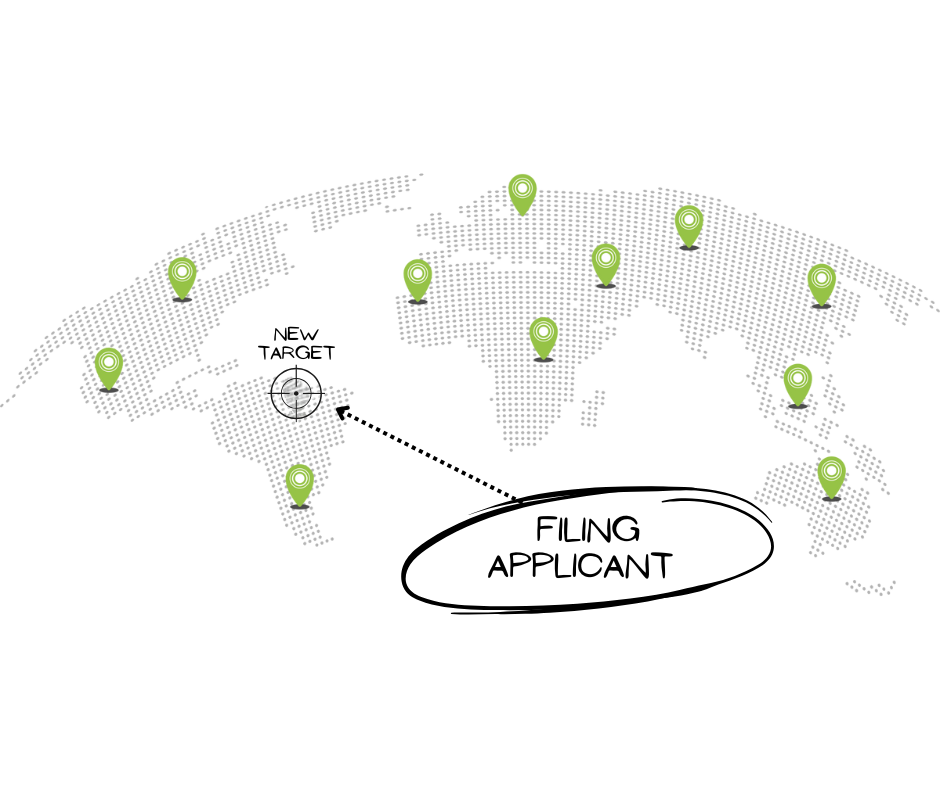
1. Define the Target Scenario
Start by identifying the foreign markets you want to focus on. Perhaps you frequently collaborate with Japanese applicants, or you’re looking to expand work from U.S. or German innovators. Pair this with your own jurisdiction, and you create a simple but powerful targeting lens: foreign companies that are actively filing here.
This ensures your business-development activity is focused on real, immediate opportunities, not hypothetical ones. It also helps you and your team understand where to put your efforts and not get side-tracked.
2. Identify the Right Signals in Public Filing Data
To uncover foreign companies expanding into your jurisdiction, the key is to analyse public IP filing data. This can be done through national office databases, WIPO or regional authorities, though this manual method is often time-consuming and fragmented.
What you’re looking for are clear business development signals such as:
- Foreign applicants filing patents or trademarks in your jurisdiction
- Recent filing activity, which indicates ongoing or upcoming projects
- Repeated filings, showing sustained interest in the market
- Technical fields or sectors that match your firm’s strengths
- Their chosen representatives, which reveals competitive dynamics
- Filing volumes, helping you prioritize high-value prospects
These insights reveal which companies are investing in your market and, therefore likely to need local representation, advisory support, translations, prosecution work, and strategic guidance.
While this analysis can be done manually across multiple public databases, IP Pilot condenses all this information into a single, structured view, making the process dramatically faster, more accurate and far more actionable for business-development teams.
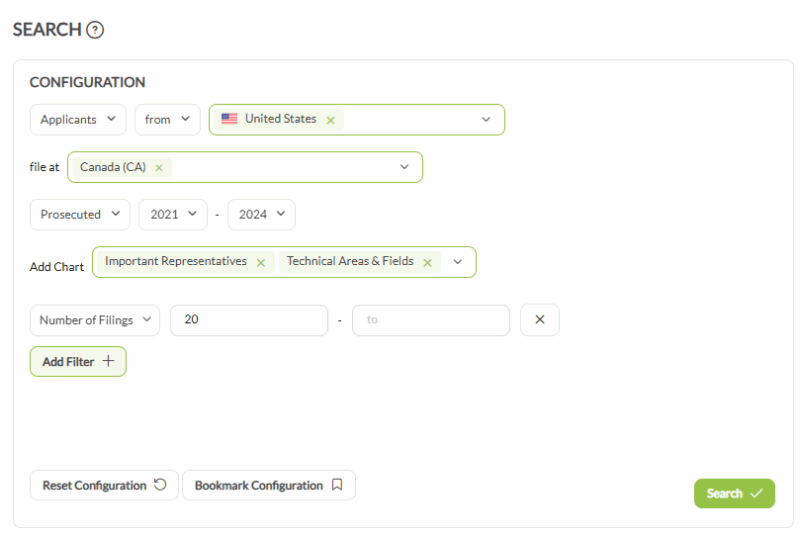
An overview of how to quickly and easily search for this data in IP Pilot
3. Analyze the Opportunity Slate
Once you’ve identified the relevant applicants, evaluate each one’s potential as a business opportunity. Consider:
- Which companies file repeatedly, indicating a long-term interest in your jurisdiction
- What technical fields they operate in, and whether they align with your expertise
- Who currently represents them locally, and whether there is room for improvement or differentiation
- Whether they are entirely new prospects or already known to your firm
This transforms raw filing data into a prioritized pipeline of high-potential targets. Think of this as your holy grail spreadsheet that can turn formulas into revenue.
4. Tailor Your Outreach Messaging
When approaching these companies, specificity is your advantage. Don’t just email with a generic introduction that gets your email sent to the bin (or simply ignored!), use the insights gathered from the filing data to craft relevant, credible outreach, making it hard for prospects to ignore:
- “We noticed you’ve recently increased your filings in the UK, we specialize in supporting foreign applicants entering the UK market…”
- “Your recent filings in Australia suggest ongoing development, and that’s great to see you are expanding. Our team can support local representation and streamlined prosecution…”
Highlight your local market knowledge, cost-efficiency, technical strength and experience supporting foreign applicants. The goal is to demonstrate that you understand their needs because you’ve already analyzed the signals.
5. Follow Up with Value
Once contact is established, differentiate yourself further by offering added value:
- A brief overview of filing trends in your jurisdiction
- Insights on competitors or sector activity
- Suggestions for optimizing their filing strategy locally
- Explanations of local procedural nuances they should be aware of
This elevates you from being “just another representative” to being a strategic partner, not just a business transaction, supporting their global expansion.
Final Thought
Adopting this proactive lead-generation approach allows your IP practice or firm to shift from being reactive, waiting for inbound requests, to being proactive, identifying and reaching out to prospects based on real filing activity. By recognizing foreign applicants as they enter your market, you position your team at the right moment with the right message.
With IP Pilot, you’re not just observing data, you’re unlocking a scalable, repeatable revenue-generation engine built on the most reliable indicator of opportunity: actual filing behaviour.